
Establishing a risk-assessment foundation for contamination control
- Client
- Pharmaceutical manufacturer
- Service
- Contamination control risk assessment and CCS development support
- Status
- Supporting FMEA completed; subsequent implementation to be confirmed
The challenge
A pharmaceutical manufacturer required support to strengthen the risk-assessment foundation underpinning its contamination control strategy (CCS).
The existing strategy provided a high-level description of arrangements, but an independent review had identified insufficient supporting rationale and risk assessment. The site needed a structured basis for explaining why its contamination controls were appropriate and how they addressed the risks associated with its activities.
An earlier attempt to develop the assessment had stalled. The immediate requirement was therefore to make practical progress on a defined technical deliverable that could inform the next revision of the CCS.
The contribution
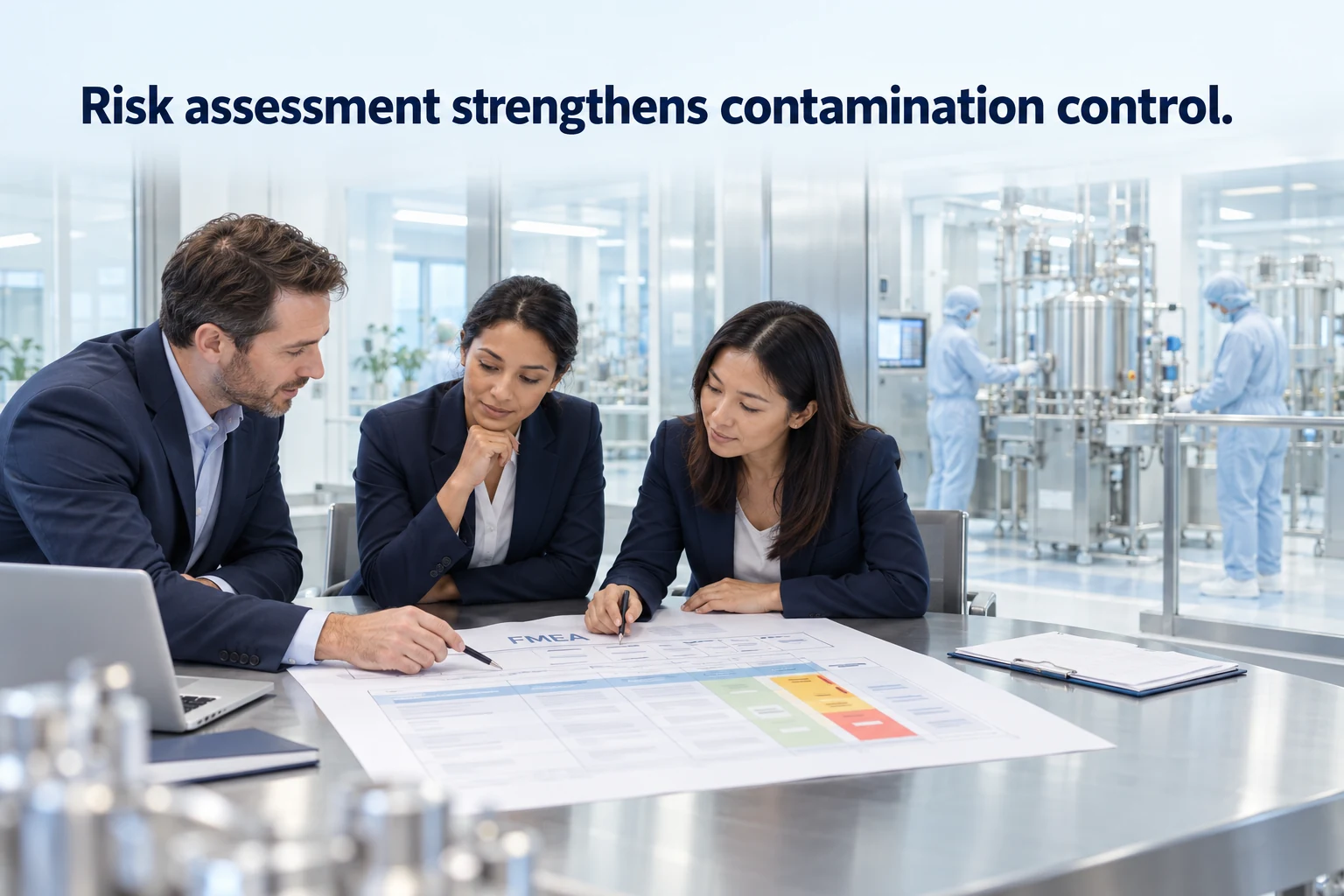
Working through a consulting partner, Jon supported the development of a failure mode and effects analysis (FMEA).
The assignment combined advance review of available information, discussion of the concerns raised during an earlier assessment and an on-site period working with the client’s team.
The emphasis was on establishing a usable risk-assessment foundation for further CCS development.
The approach
Understanding the underlying concern
Before the visit, Jon sought clarification of the issues identified by the referring consultant and requested the relevant annotated documentation.
This helped establish the distinction between improving the presentation of the CCS and addressing the more fundamental need for supporting risk assessment.
Working with site expertise
The on-site work provided an opportunity to develop the assessment alongside personnel familiar with the facility and its activities.
This brought together independent technical challenge and local operational knowledge. It also allowed progress to be made collaboratively on an assessment that needed to reflect the site’s circumstances.
Developing a defined deliverable
The work focused on producing an underpinning FMEA that could inform revision of the CCS.
Contemporaneous updates recorded substantial progress during the assignment and subsequent completion of the assessment. This gave the site a tangible output against which further strategy development could proceed.
The outcome
The site received an underpinning FMEA to support an update to its CCS.
The assignment brought a previously stalled assessment to a defined deliverable. Correspondence at completion recorded the site’s positive response, with the referring consultant also acknowledging the work.
The evidence supports completion of the risk assessment. Approval of a revised CCS, implementation of resulting actions and subsequent operational effectiveness would require separate confirmation.
What this assignment demonstrates
The project demonstrates Jon’s ability to help a knowledgeable site team make progress on a complex quality risk assessment.
It illustrates the value of defining the underlying problem clearly, combining operational knowledge with independent challenge and producing a practical foundation for further contamination control work.
Client names, locations, personnel, dates and identifying project details have been omitted to preserve anonymity.