
Making the contamination control strategy useful in practice
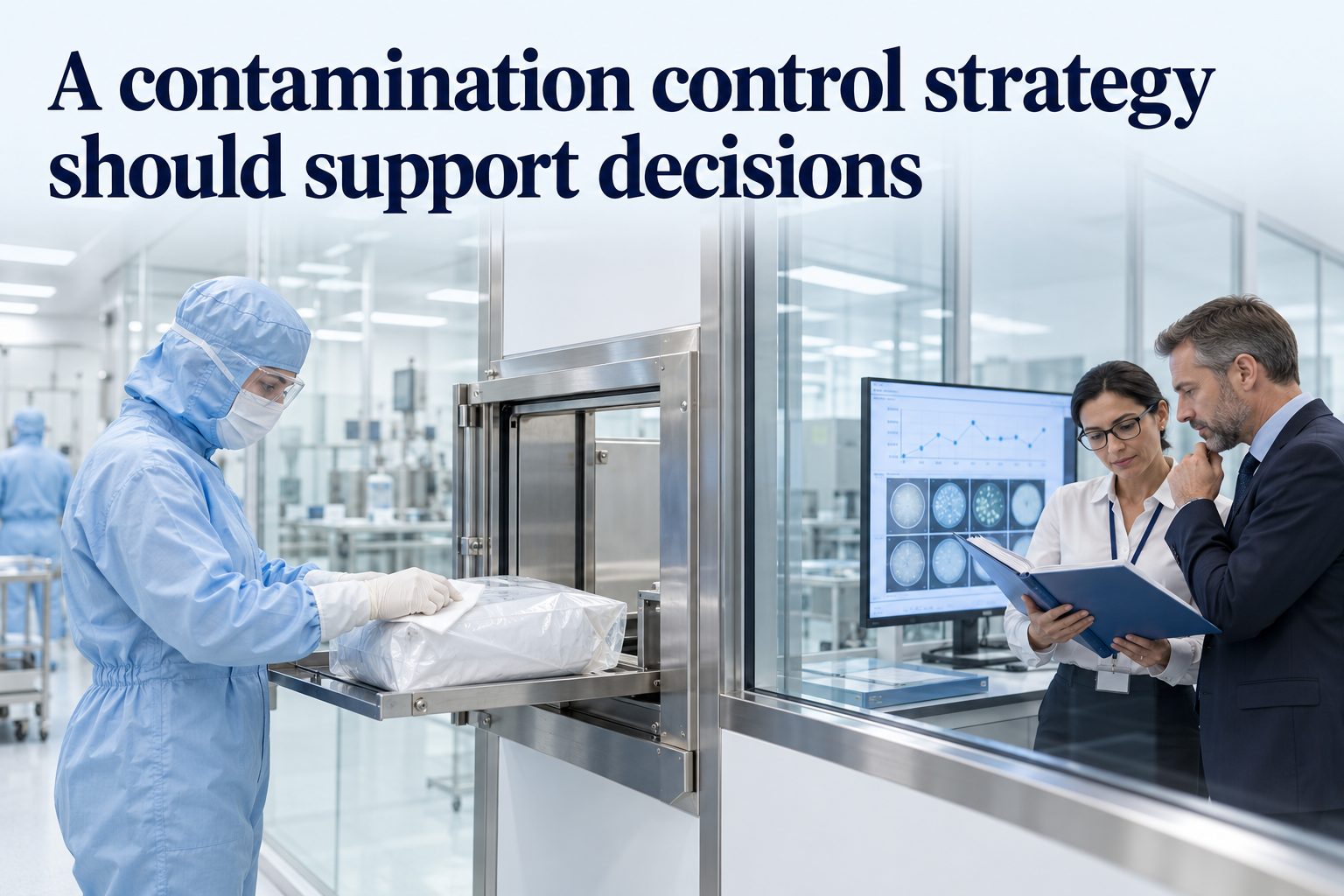
A contamination control strategy brings together the measures used to prevent contamination and the evidence used to assess whether those measures remain effective. Its practical value depends on whether the relationships between risks, controls and operational decisions are clear.
A document may describe the facility, list procedures and reference monitoring programmes in considerable detail, while leaving the reader uncertain about why a particular control is needed or what should happen when it fails.
I find it useful to organise the discussion around a defined contamination risk and follow it through the operation. What could introduce contamination? Which measures prevent or reduce that opportunity? How is their effectiveness verified? What information would require action? Who makes that decision?
For material transfer into an aseptic processing area, this could involve the starting condition of the material, packaging configuration, disinfection method, transfer sequence and subsequent handling. The supporting evidence needs to relate to the actual materials and practices used.
The assessment should also identify dependencies. An effective disinfectant does not compensate for incomplete surface coverage, an unsuitable contact time or recontamination after treatment. Reviewing the controls together can reveal vulnerabilities that are less apparent when each procedure is considered separately.
Monitoring provides information about performance, but the interpretation should take account of the process, the sampling arrangements and other relevant evidence. A satisfactory result needs to be understood within those limitations.
In my view, a useful strategy should allow an operational team to explain the preventive controls, the means of verification, the response to adverse information and the records demonstrating that the approach works. Detailed procedures can remain in their existing locations, with clear references and responsibilities.
Changes, investigations and trends should then inform the review of the strategy. If operational experience identifies a weakness, the response should consider whether the underlying control needs improvement.
The objective is a coherent explanation of how contamination is controlled, supported by evidence that can inform decisions during routine operation and when conditions change.
Background and scope
EU GMP Annex 1, sections 2.2 to 2.6 and 8.127 to 8.130. Annex 1 addresses sterile manufacture; its principles should be applied to other operations with appropriate consideration of scope.