
Establishing GMP readiness following a prolonged facility shutdown
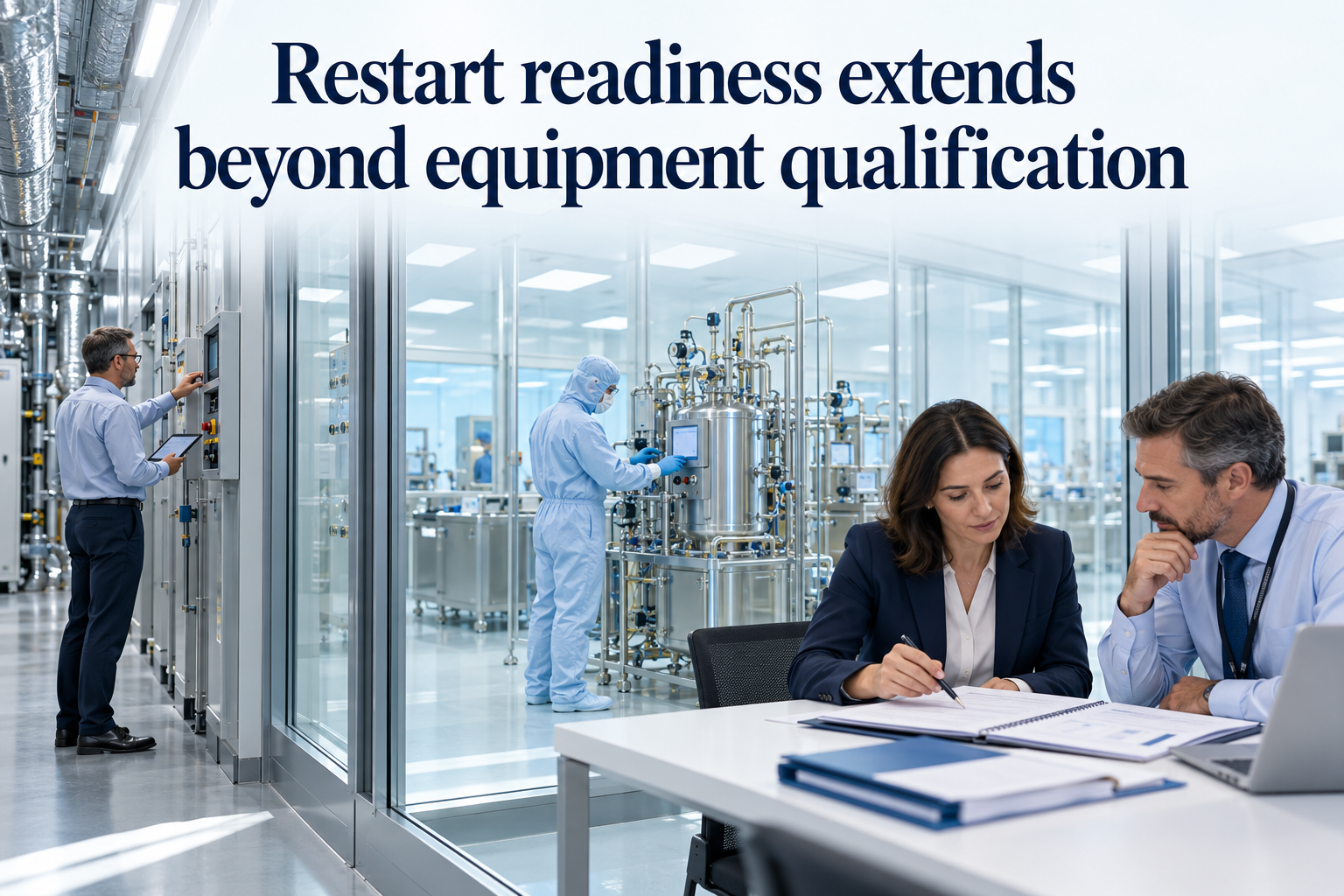
Restarting a pharmaceutical manufacturing facility after a prolonged shutdown requires a coordinated assessment of the facility, its systems and the organisation that will operate it. The completion of engineering work is an important milestone, but further evidence may be needed before manufacture can resume.
The starting point should be the scope of the shutdown and the changes made. An HVAC upgrade, for example, can affect room pressures, airflow patterns, environmental recovery and the conditions under which equipment and processes were previously qualified.
The assessment should identify which elements remain supported by existing evidence and which require additional work. This should consider the condition of equipment and utilities during the shutdown, any preservation measures, maintenance history and the impact of construction activities.
A restart plan can then establish the sequence of activities and the evidence required at each stage. Cleaning and decontamination, utility readiness, calibration, qualification and environmental performance need to be coordinated so that later work is undertaken under appropriate conditions.
The operational arrangements also need attention. Procedures may require revision, suppliers or materials may have changed, and personnel may need refresher training or reassessment before returning to their roles. For aseptic manufacture, the need for process simulation and personnel qualification should be addressed within the restart assessment.
In my view, defined decision points are particularly valuable. Each should identify the acceptance criteria, outstanding issues, responsible reviewers and authority to proceed. This makes the basis for progressing from engineering completion to operational use visible to everyone involved.
A qualification report with unresolved deviations may require further assessment before the affected system can support manufacture. Equally, an outstanding item with no impact on the proposed activity should be assessed on its own merits.
The final readiness decision should bring the evidence together and define any restrictions, enhanced monitoring or follow-up commitments.
A successful restart depends on demonstrating that the facility can again operate under a controlled and sustainable GMP framework.
Background and scope
EU GMP Annex 15, sections 1 to 5, 10 and 11. These provide background on planning, qualification, requalification, cleaning validation and change control. The restart discussion is a practical application of these principles.