
Closed processing and the justification for segregation
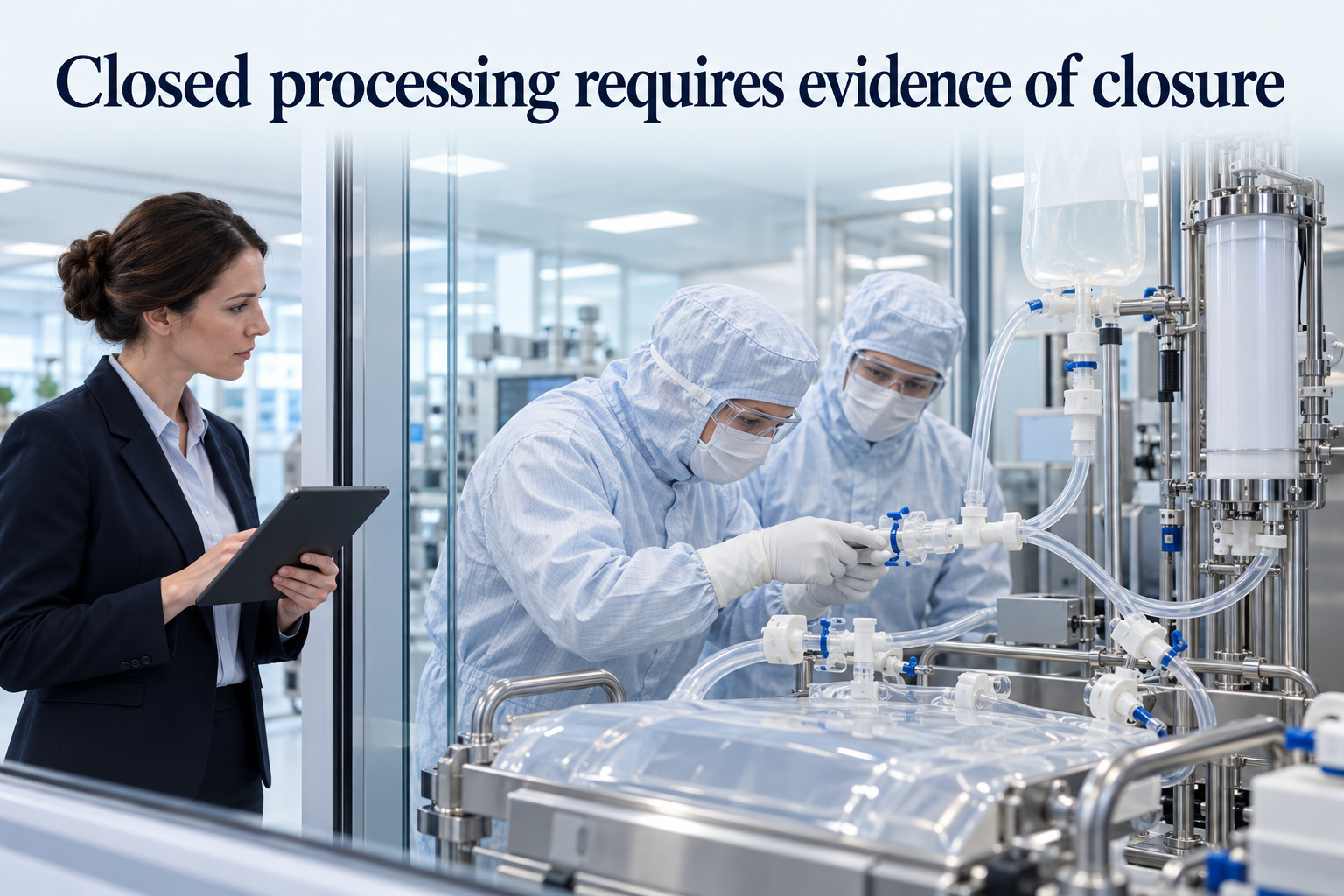
The use of closed processing can materially reduce opportunities for contamination and may support a different approach to facility segregation. However, the description of a process as closed needs to be supported by an understanding of how the system is assembled, operated and maintained.
A process flow diagram may show a continuous product pathway while omitting the activities needed to establish or preserve that pathway. Connections, sampling, additions, filter changes and recovery from equipment faults all warrant consideration.
For a biological manufacturing process, I would start by defining the purpose of each segregation measure. Protection against environmental contamination, prevention of cross-contamination between products and protection of a downstream process following a virus reduction step are related considerations, but the associated hazards are different.
The assessment should then establish where the process boundary is maintained, where it can be challenged and what evidence supports its integrity under the actual operating conditions. Supplier information is useful, but its applicability to the intended configuration and use needs to be established.
For example, a closed chromatography system may provide considerable protection during routine processing. Its set-up, disconnection, external cleaning and response to a damaged connection still need to be addressed. The assessment also needs to consider how personnel, equipment and waste could transfer contamination around the closed pathway.
In my view, the justification should identify the controls that allow reliance on closure and the circumstances in which that reliance would no longer be appropriate. Staff need a defined response to a breach, including containment, assessment of product impact and the conditions for resuming operation.
The practical question is whether the evidence supports the proposed arrangement throughout the process lifecycle, including foreseeable interventions and failures.
A well-supported assessment can enable proportionate facility design while making the limitations of the system clear to the people operating it.
Background and scope
EU GMP Annex 1, sections 2.2 to 2.6 and 8.127 to 8.130. Annex 1 addresses sterile manufacture; its principles should be applied to other operations with appropriate consideration of scope.